
Anyone following the Rugby World Cup will know that England’s exit from the ‘pool of death’ has come as an embarrassing shock to much of the UK media and the RFU. As such, the blame game started almost immediately, with Stuart Lancaster, Andy Farrell, Chris Robshaw and Sam Burgess all in the firing line.
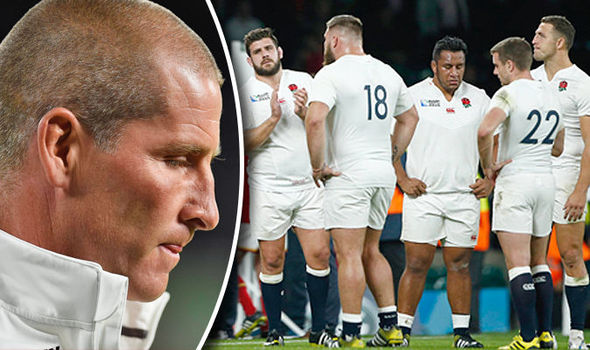
England, after-all, has the world’s largest grass roots player base, best funded RFU and a more than competitive club game with the Aviva Premier League. By rights then, England should be a super power in Rugby Union. Yet, England, my Welsh friends like to remind me were the first sole host nation to not reach the knock out stage (they casually forget Wales’ exit from the 1991 World Cup which was co-hosted by the then Five Nations, including Wales). They are also the first former champions to exit the tournament before the knockout stage. England have also slipped down to their lowest position ever in the World Rankings , 8th after being at 4th at the beginning of the tournament.
So, 11 days after England’s early exit I’m going to give my ignorant opinion as to why this was the case.
Player Selection and Positions
This is the aspect of the tournament that has caused Andy Farrell and Stuart Lancaster the most controversy. Farrell, England’s defence coach has been accused of having too much influence over Lancaster (England’s Head Coach) in regards to selection of player. An allegation they both deny. However, Lancaster’s consistent selection of Farrell’s son, Owen Farrell, at number 10 has drawn criticism from much of the English fan base. This is just one of the many player selections and position that has led to criticism of the Lancaster regime.
As I mentioned, Owen Farrell’s selection over George Ford as Fly-Half has caused outcry in much of the England fan base. Farrell is undeniably a good player; his kicking game is superb, having scored over 45 conversions, 2 drop goals and 79 penalties for England since 2012. His 100% kicking record against Wales in the world cup match in September cannot be overlooked – if England had taken that last penalty his sure foot may have meant we would still be in the cup.
However, many in the England camp rate George Ford over Farrell at number 10. Farrell is a great kicker, however, Ford is a better overall player. It’s optimistic to think England could simply rely on Farrell’s kicking by slowly building into the oppositions half with the intention of forcing a penalty – like we did in to 2003.
Ford, like Farrell can kick. The main difference is he offers a threat of penetration on the ball. Farrell can kick at goal slightly better but offers far less ball in hand. England is in a privileged position with two talented number 10s to pick from (that’s not even including Danny Cipriani). However, Lancaster’s consistent picking of Farrell over Ford is a criticism that can be levelled at him. After-all, Ford was man of the match in England’s win over Wales in the opening match of the 2015 Six Nations Championship, yet he did not start against Wales in the world cup. He also scored 25 points in England’s thrilling 55–35 win over France in March, contributing towards the 2 tries and 75 points he scored overall in the championship. Essentially, he’s not new at number 10, so why not trust him in the big games? If England are having a good game that is forcing penalties then would be the time to bring on Farrell.
Moreover, when Ford was given the number 10 shirt Lancaster rotated Farrell to 12. This pairing may have worked when they were school kids, but it didn’t work against Wales with 10 minutes to go. Why bring on Ford if you’re going to leave Farrell to babysit him?
This rotating of Farrell to 12 leads me onto the next criticism that can be levelled against Lancaster’s selections. In what has been dubbed the ‘Centre pairing Crisis’. Lancaster can’t seem to pick a consistent pairing at 12 and 13. For England v Fiji it was Brad Barritt and Jonathan Joseph. For Wales it was Sam Burgess and Barritt. For Australia it was back to Barritt and Joseph, and for Uruguay is was Farrell and Henry Slade. That’s not mentioning the other variations Lancaster has experimented with over the Last 4 years – around 14 in total. England should not have still been experimenting with their centre pairing during the world cup.
The next selection criticism I have is unfortunately Sam Burgess. Burgess has quickly become a media scape-goat for England’s failure against Wales and, therefore, the world cup as a whole. And, while I certainly feel his selection was to the detriment of the England team this time around, I feel he can grow into Union given enough time. The League convert was thrown into the national squad at the highest level of the game. He’s not Sonny Bill Williams. He needed time to adapt his skillset to the different code. Playing him at 12 in the national squad when he plays at 6 for his club side is questionable. Bath need to play him at 12 before he can be considered for the role in the England squad. Regardless, the media scape-goating of Burgess has to stop. He was not the only problem in the England squad, rather he was part of a much larger centre selection problem.
Another gripe I had with Lancaster’s selections was Ben Youngs over Danny Care at 9. Though that might just be because I’m a Quins fan.
One more controversy I saw online was the selection of Johnny May over Jack Nowell at 11. Though that argument seems to be mostly between Gloucester and Exeter fans…
THAT Decision
The main talking point for England fans seems to be the decision to go for the try against Wales rather than the penalty kick. This failed attempt at victory has led to a lot of abuse of Chris Robshaw’s decision making. However, my ignorant opinion is he made the right decision. Though Farrell was having a great kicking game, there was still no guarantee that he would have made such a difficult kick and achieved the draw. Why then settle for a draw that was not even guaranteed rather than go for the win? If England had kicked for goal and missed the ambition of our players would have been called into question. At least going for the win showed that if no-one else, Robshaw wanted the victory (even if the performance of some players said otherwise). Moreover, had England scored the kick, there was no guarantee that with 2 minutes to go we would have not conceded yet another silly penalty and given Wales the win anyway. The real bad decision was throwing to the front of the line-out where we could be easily knocked into touch. Although, this strategy had worked against Wales before.
Quality of the Opposition
England’s decision to go for the try rather than the kick against Wales was undoubtedly a key moment in our world cup campaign. However, the real reason England have departed their own word cup early is simple. We were beat by excellent teams. Even with their spate of injuries, Wales are a nation of rugby players. Wales have won the Six Nations twice in the last 4 years, with a Grand Slam in 2013. Though England were 10 points up with 20 minutes to go against Wales, the fact that the Welsh came back from that deficit attests to the quality and self-belief of the Welsh team, despite their injuries. They forced England to make mistakes at the breakdown and capitalised on the penalties conceded.
The Wallabies were in a different league entirely to England, as the score line reflected. 33-13 at Twickenham is a thumping by all accounts and the Australians thoroughly deserved the win.
The real reason why England is out of the world cup is, in my opinion, simple – we were beat by better opposition. The questionable selections and decision making come after this fact. England was in the ‘group of death’. One Tier 1 nation was going to be disappointed. It just happened to be the host nation that fell short.

 my ignorant opinion
One thought on “England’s Word Cup Exit”