
After the recent announcement that Russian Athletics has been banned from competing at the 2016 Olympics due to accusations of state sponsored doping there has been much debate online about how prevalent the practice is in various sports. The main topic of conversation seems to be whether Russia are in-fact the only nation to have a state sponsored doping regime, with many arguing that Russia have been singled out for political reasons. Obviously, I am not involved in professional sport, nor am I part of any anti-doping agency. I am, however, pretty in-tune with sports news and media – so here’s my ignorant opinion on how prevalent doping and performance enhancing drugs (PEDs) are in different sports.
Athletics
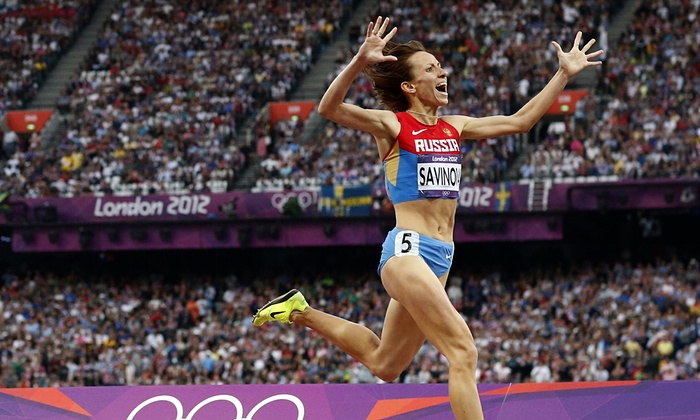
It’s fair to say that doping and PEDs are an issue in Athletics – the revelation of allegations that Russian Athletics had a state sponsored doping program is not the first brush the sport has had with doping. While the scale of allegations against Russian Athletics in the IAAF report are truly breath-taking, it’s naïve to think that only the Russians are responsible for acting illegally in the sport. State sponsored doping and PEDs has occurred before in athletics, not least the East Germany team between the 60s and 80s, however, it’s not just Soviet or ex-soviet nations that have a problem with the sport. The list of athletes banned for doping or PEDs is frankly huge – and that’s just the ones that have been caught. And while it’s fair to say it’s unlikely that other nations have a state sponsored system quite as extensive as Russia’s, there is clearly a doping and PED culture in Athletics – detractors might say that catching and banning such a staggering number of athletes shows how serious athletics takes doping. However, the fact that so many have been caught also shows the prevalence of the practice Athletics.
Cycling
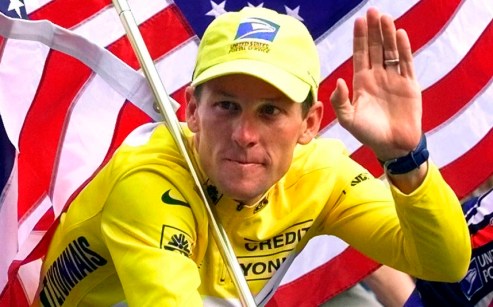
Perhaps the worst sport in terms of reputation for doping, Cycling has had a long history with PEDs and Doping. The meteoric fall from grace of American super-star, Lance Armstrong, revealed just how ingrained doping was at the top level of professional cycling – if Armstrong’s stripped 2005 Tour De France title had been awarded to the cyclist with the fastest time not linked with doping, it would have been given to 23rd place. It’s safe to say doping was rampant in the sport, in Armstrong’s own words everybody at the time was doing it: ‘I would even say we all knew what everybody was doing, so I knew what my competitors were doing’. According to an article in March by the BBC, a 227 page report by the Cycling Independent Reform Commission (Circ) says that the doping culture in cycling still exists. However, it’s not all bad news for cycling, the Bio-passport introduced in the 2008 racing season has helped to clamp down on doping. Though there will always be ways to get around rules, no matter how strict they are, doping is far less prevalent in the sport (at east at the highest level) than it was. In July this year World Anti-Doping Agency director general David Howman stated that cycling had cleaned up its act since the days of Lance Armstrong.
Association Football

With the emergence of the Russian Athletics scandal Arsenal FC manager Arsène Wenger has made comments about doping in Association Football. Stating for L’Équipe’s Sport & Style Magazine: ‘In 30 years as a coach, I have never had my players injected so that they might perform better. I’m proud of that. I have played against a lot of teams who were not in the same frame of mind’. He also revealed that currently blood tests are not conducted by national FA’s, Regional federations like UEFA or the world Governing Body FIFA. As Wenger argues:
‘I’m not satisfied with the level of testing because I believe blood tests should be done…If you want to go into a bit more sophistication you have to do blood checks. Urine checks are superficial and not deep enough to say absolutely sure that we have no doping problem in football.’
‘I think no [we don’t have a problem] and I wish no but on the other hand, can you have 740 football players at a World Cup and come out with zero alert on any doping? It’s a little bit surprising. I hope it is true but I think to be completely sure about it, you want to go into deeper tests.’
Frankly, I was shocked when I discovered there are no blood tests in Football. With the money and systemic corruption in football (see FIFA), it will be wholly unsurprising if doping is a problem, maybe even common, in the beautiful game.
Rugby Union
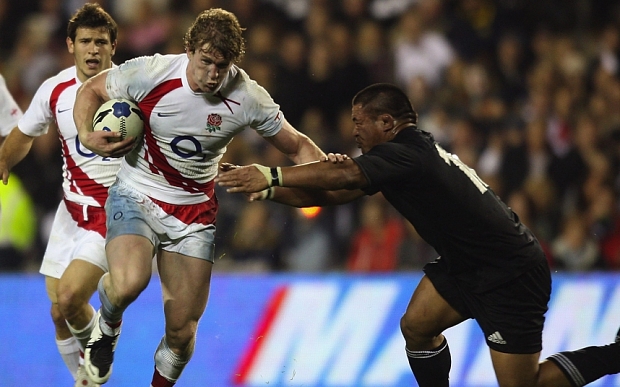
The last sport on the list for this article is Rugby Union. An article in the Telegraph released on 11 September argued that Rugby is the dirtiest sport in Britain – with 16 (out of 47) of the UK Anti-doping Agency’s banned athletes from Rugby Union (12 from League). Many argue this is a testament to the stringent drugs testing policy of Rugby’s governing bodies, however, like athletics it also reveals a doping/PEDs culture in the sport. The BBC revealed today that the UK Anti-doping Agency thinks doping/drug abuse is ‘off the scale’ in amateur and semi-professional Rugby in Wales. Player’s at grass roots levels even admitted to using PEDs or doping to improve their game – for many of them it’s about the opportunity of becoming pro. Former Scotland and Lions fly-half, Craig Chambers, stated about his son who tested positive for PEDs:
‘There is a lot of pressure on young guys…Sam was desperate to put on weight because they said he was not big enough. The message was that if you are not big enough or strong enough then you don’t get picked. He wanted to put on weight. He did not do it the right way, but he did it because he wanted to take that next step. Just because Sam got banned does not mean that pressure has disappeared.’
People might argue that the results in Wales only show the culture of the grassroots sport in Wales. However, the WRU argues that drug testing in the regions is much stricter than in other Rugby playing nations. It’s not unlikely that the same problem lies at the grassroots level across Britain, if not across the sport as a whole. For a game that holds its values so dear, Rugby needs to clean up its act at the grassroots level.
Final Thoughts
At a competitive level of any sport there will always be pressure to take PEDs or dope in order to improve an athlete’s success. Even with the strictest measures in place athletes, coaches and teams will find a way to slip through the gaps in-order to win. While there has been a large crackdown in some sports at professional level, more needs to be done in others…cough…football…cough… For other sports, like Rugby, more needs to be done to educate players at a grassroots level away from PEDs and doping, rather than simply having the fear of a ban. Unless measures are applied to both the professional and amateur games, doping and PEDs are difficult to crack down on. However, some sporting bodies (FIFA and BCCI) have argued increasing measures will have privacy and financial implications which could harm both athletes and their respective sports. Doping and PEDs are part of the sporting world, unfortunately there’s no one answer to how they should be tackled.
Images from: Guardian, Telegraph

 my ignorant opinion